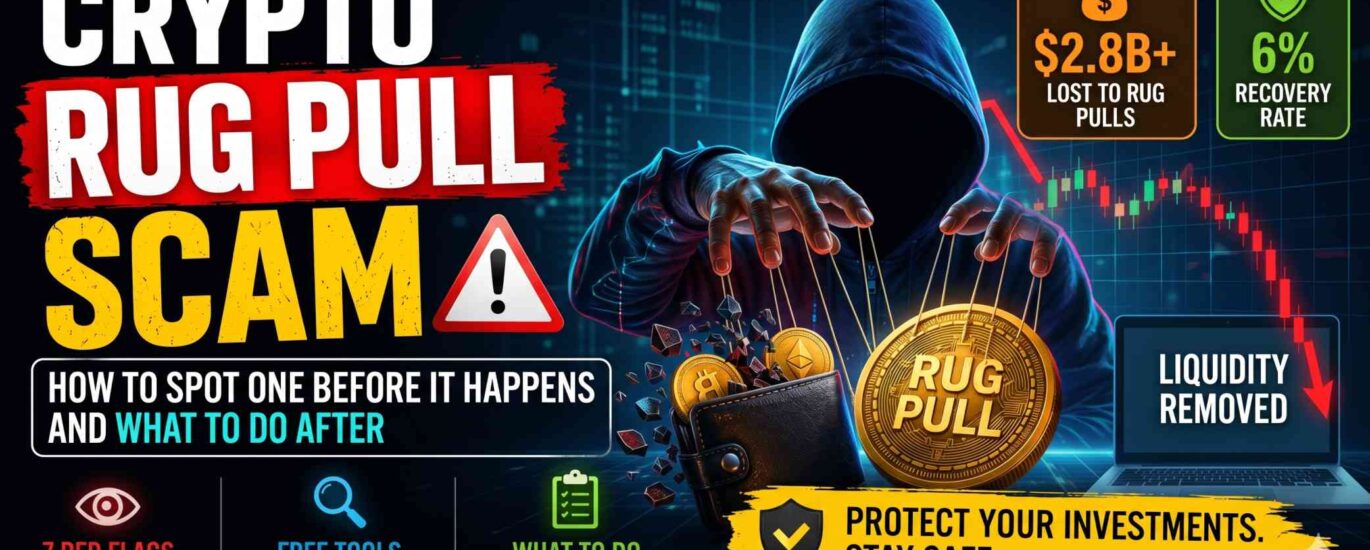
In 2025‚ crypto rug pull scams cost investors over $2․8 billion in losses․ More than 5000 new tokens are created every day‚ with a disturbing amount of them created for the sole purpose of stealing money․
Most victims had no reason to suspect anything․ The project looked legitimate․ The community seemed real․ But the liquidity disappeared․
In the case you’ve not yet invested‚ we explain what to look out for‚ and free tools you can use to try to keep your money safe early on․ If you’ve already invested‚ we’ve broken down what to do next‚ from saving evidence‚ reporting the crime and tax authorities‚ and being realistic about your options in the future․
What Is a Crypto Rug Pull? (And Why It’s Different from Other Scams)
A rug pull‚ or exit scam‚ occurs when the developers of a crypto project build up a large balance of the investors’ assets‚ then withdraw all of the assets from the liquidity pool and dump their tokens․ The price immediately drops and the holders are left with worthless coins․
Unlike a market crash or a hack‚ a rug pull is planned from the beginning․ The scammers built the trap․ That distinction is relevant because it means there are usually warning signs before you invest․
Hard Rug Pull
Because the contract was hard-coded with malicious code‚ it will automatically execute once the liquidity pool is sufficient‚ and the balance will be drained within seconds‚ before the price chart can fully register․
Soft Rug Pull
Developers may then slowly try to sell their allocation over a few days or weeks‚ hiding their price bleed as market changes․ Look for constant sell volume from a small number of wallets․
Honeypot Token
You can buy but the contract blocks all sells․ Your funds will be permanently locked․ Always test on Honeypot․is before you buy‚ it only takes ten seconds․
Meme Coin Rug Pull
Most of the tokens in this class are now launched on a service like Pump․fun‚ where anyone can launch a token in minutes with no code and the recommended process is to launch alongside an existing meme‚ pay influencers to pump‚ and drain the pool in 48 hours․
7 Red Flags That Signal a Crypto Rug Pull Before It Happens
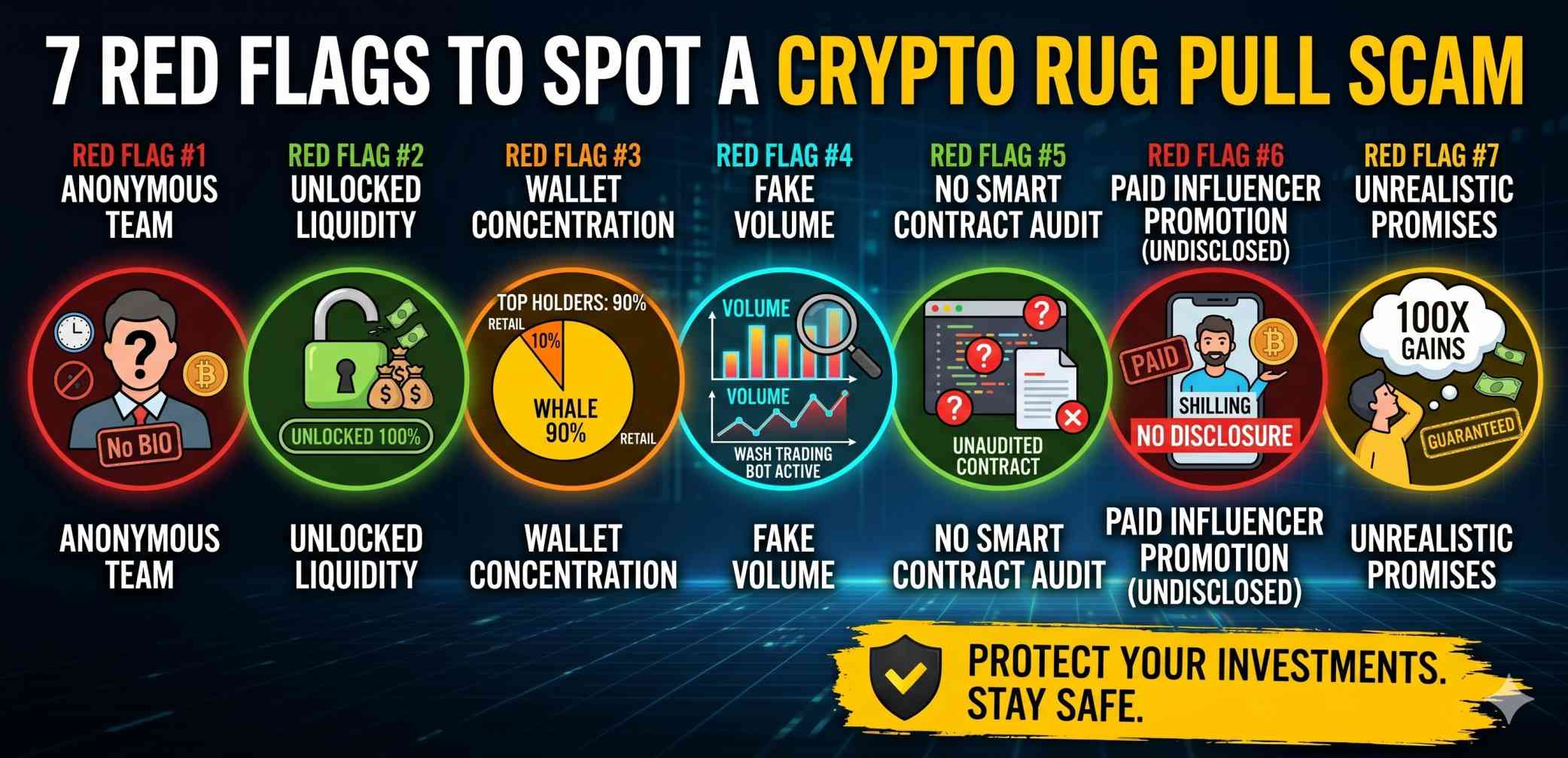
Rug pulls are rarely subtle․ The more familiar you are with them‚ the more predictable they become․
Red Flag #1: Anonymous or unverifiable team
The problem with these new coins is that unlike the creator of Bitcoin‚ there is no LinkedIn‚ no GitHub and no previous coins associated with the people behind each project․ A legitimate team has a reason to stand by their work․ Search team member names‚ do reverse-image searches on their photos‚ check for activity on their GitHub‚ etc․ Dead ends at every level are a serious warning․
Red Flag #2: Liquidity Pool Unlocked or Unaudited
Locked liquidity is one basic means of investor protection․ The developers are unable to withdraw liquidity for a predetermined amount of time․ Unlocked liquidity can be withdrawn at any time․ Team Finance or Unicrypt lock can be verified․ If there is no lock or it is under six months‚ Walk away․
Red Flag #3: Wallet Concentration: Top 10 Holders Account for 80%+
Where only a few wallets own a large portion of the supply‚ the price can be impacted greatly by a single transaction․ Websites such as Bubblemaps and DEXTools detail supply distribution․ If more than 80% of the token is held by the top 10 holders and it appears that they are related‚ the token might be a coordinated dump․
Red Flag #4: Fake Volume and Wash Trading
High volume can be exaggerated through wash trading or a single wallet repeatedly buying and selling its own assets․ Organic interest tends to express itself through many buyers rather than just one or two․ If these addresses buy every time‚ the volume is unlikely real․
Red Flag #5: Failing to conduct a Smart Contract Audit
If an independent third party audit has been performed by CertiK‚ Hacken‚ or PeckShield‚ the code has been checked for backdoors and malicious functions‚ but this is no guarantee․ If they claim to be audited‚ you should see an audit report for a project‚ not just an audit badge․
Red Flag #6: Paid Influencer Promotion Not Disclosed
If you see many accounts suddenly promoting an unknown token with similar messages‚ these are likely instances of paid (and undisclosed) crypto shill campaigns or pump campaigns․ They’re sold to investors pre-launch‚ who then offload them to retail buyers․ Red flags include phrases like “next 100x” or “don’t miss this”․
Red Flag #7: ‘100x Guaranteed’ type promises
There are no guarantees․ The promises of high returns are designed to elicit FOMO and short-circuit rationality․ Legitimate projects talk about technology and use cases․ Scam projects talk about price predictions and guaranteed profit․ Once you slow down‚ this difference is obviously obvious․
Free Tools to Check Any Token for Rug Pull Risk Before You Buy
You can do proper due diligence without being a developer․ These four tools are free‚ fast and cover most of the most critical risks․ Make sure you have utilized all of them before any new venture․
TokenSniffer
The user simply pastes in a contract address‚ and TokenSniffer returns an instant risk score‚ and lists the issues detected‚ such as honeypot code‚ hidden mint functions or high sell taxes․ A low score should stop you cold until you know exactly why․
Honeypot․is
This tool also gives a simulated buy and sell transaction‚ and will let you know if the token allows sells at all․ If it does not pass‚ you should stop here․ There is no reason to hold a token you cannot sell․
DEXTools and Bubblemaps
Real-time trading and largest holders are available through DEXTools‚ and ownership is visualized through Bubblemaps‚ which helps to quickly identify holders who are coordinated․ Together‚ they reveal whether a small group controls supply and whether those wallets appear to be working together․ That combination is one of the clearest dump signals available․
GoPlus Security
GoPlus looks into trading restrictions‚ proxy contracts‚ ownership concentration‚ and dozens of other risk factors․ This is useful for more in-depth investigations when you have a hunch‚ but simpler tools haven’t raised any red flags․ It often catches technical issues that non-developers would not catch otherwise․
You Got Rug Pulled — Here Are the Exact Steps to Take Right Now
What you do in the first few hours after a rug pull matters more than most people realize․ Follow these steps‚ in order․
Step 1: Stop – Do Not Buy More to Average Down
Sometimes if a token crashes overnight‚ you might feel an instinct to buy at the cheaper price․ Don’t․ This is not a market dip․ This is a deliberate exit․ You are watching․ Buying more puts more money in the hands of the people who just stole from you․ Stop all activity on the token immediately․
Step 2: Document Everything
Capture all evidence before websites and social channels disappear – and they will disappear fast․
- Contract address and your transaction IDs (TXIDs)
- Website‚ whitepaper‚ and social media accounts for the project
- Telegram and Discord conversations with the team
- Price chart screenshots at the time of the rug
These records help in reporting‚ forensic‚ and tax purposes․
Step 3: Follow the Developer Wallets on the Blockchain
On public blockchains‚ all transactions are visible․ Check Etherscan or BscScan to see if the drainers spent the funds․ Track the wallet that deployed the contract‚ and look at outgoing transactions‚ as a lot of devs make the mistake of sending their money to centralized exchanges that implement KYC․ If you see a deposit on a CEX‚ make a note of the address․
Step 4: Report to FBI IC3‚ FTC‚ and the Exchange․
Report the crime to the FBI Internet Crime Complaint Center at ic3․gov‚ and the Federal Trade Commission at reportfraud․ftc․gov‚ to help build cases against fraudsters․ Contact the exchange where you purchased the tokens‚ as compliance teams can flag wallets and help investigators trace stolen funds․ UK victims can report scams to Action Fraud․ EU victims can contact their national cybercrime unit․
Step 5 – Consider Blockchain Forensics for Big Losses
If you lost more than $10‚000‚ you might also consider contacting a professional blockchain forensics firm‚ such as Chainalysis or CipherTrace‚ that tracks funds and works with law enforcement․ This is expensive and does not guarantee recovery‚ but it will considerably increase the chance that investigators are able to build a case․
Step 6: Claim a Tax Loss for Your Stolen Crypto
In the United States‚ losses of crypto to scams may constitute a deductible loss․ In the United Kingdom‚ HMRC permits capital loss claims for stolen crypto in some circumstances․ Each country has its own EU regulations․ Consult a tax professional with crypto experience․ You’ll need your documentation from Step 2 to do this․
Can You Recover Money Lost in a Crypto Rug Pull?
The honest answer is‚ recovery is difficult․ The global rate for recovery from rug pulls is low single digits‚ at about 6%․ But your options depend on what the developers actually opted to do with it․
When Recovery Is Possible
The most predictable way of recovering funds is when the stolen funds are sent to a centralized exchange․ If developers transfer stolen assets from a self-custody wallet to Binance or Coinbase‚ their KYC data will be saved․ Law enforcement agencies may eventually issue subpoenas․ File early and often‚ because wallet activity will intermingle and become more difficult to analyze․
Is a Rug Pull Illegal? What the Law Says in 2026
Yes․ Rug pulls have been prosecuted as federal crimes of wire fraud‚ securities fraud‚ or commodities fraud in the US․ New EU MiCA regulations will increase enforcement․ Anonymity protections that developers seek may not apply․ Use of blockchain data in addition to exchange records‚ has exposed many such teams․
Real Prosecutions Are Happening
In 2025 and 2026‚ rug pull developers were charged‚ convicted‚ ordered to forfeit their assets‚ and sentenced to prison time for their crimes․ In each case‚ these actions were correlated between their on-chain activity and off-chain communication via social media․
Warning: Fake Recovery Services
After rug pulls‚ recovery scammers claim they can help recover your funds for an upfront fee or by asking for the private keys․ No legitimate company will ever ask for your private keys․ Anyone who contacts you for this is a second scam․ Block them․
Frequently Asked Questions About Crypto Rug Pulls
What is a rug pull in crypto? Learn how they work and how to spot them․
To carry out a rug pull‚ the developers build a token‚ raise investor interest‚ drain the liquidity pool or sell their holdings‚ before disappearing or going offline․ The token’s price drops close to zero․ The exit is not a hack․ It was the plan all along․
How do I know if a token is a rug pull before buying?
Check TokenSniffer‚ Honeypot․is‚ Bubblemaps‚ GoPlus Security․ Ensure liquidity is locked․ Also‚ you should make sure that no wallet has more than an acceptable percentage of the project․ If there are many of these red flags‚ move on․
Can I get my money back after a rug pull?
Rare․ Report to FBI Internet Crime Complaint Center (IC3) and FTC․ If you lose a larger sum‚ a blockchain forensics firm may be able to follow the flow of funds‚ and you may be able to claim a tax loss․
Are rug pulls illegal? Could developers go to prison?
Yes‚ rug pulls in the United States‚ the EU and the UK are prosecuted as fraud․ Several developers have been arrested and convicted․ Anonymity is also not a guarantee; exchange KYC records have revealed the identities of several perpetrators․
What’s the difference between a rug pull and a pump and dump?
In a pump and dump‚ all trades after the price spike are made against the existing token; in a rug pull‚ the liquidity pool has been emptied and the token is worthless․
Due Diligence Checklist — Before You Invest
- Team is publicly identifiable with a verifiable track record
- Liquidity is locked for at least 6 months (verified on Unicrypt or Team Finance)
- No single wallet holds more than 15% of supply
- Smart contract audited by CertiK, Hacken, or PeckShield — report is publicly available
- Token passes Honeypot.is without sell restrictions
- GoPlus Security shows no critical flags
- No guaranteed return promises or influencer pump campaignsGoPlus Security shows no critical flags
- No guaranteed return promises or influencer pump campaigns
Action Checklist — After a Rug Pull
- Stop all activity on the token immediately
- Screenshot all project pages, social channels, and communications
- Record your TXIDs and the contract address
- Trace developer wallets on Etherscan or BscScan
- File reports with FBI IC3 and FTC
- Contact the exchange where you bought the token
- Consult a blockchain forensics firm for losses over $10,000
- Speak to a crypto-savvy tax professional about claiming a loss
If you lost a large amount in a rug pull‚ consider hiring a stolen crypto recovery service․ The company RescueWallets specializes in blockchain forensic analysis to help victims find evidence and track the funds for investigation purposes․ The team will also work with law enforcement agencies when appropriate․ Visit rescuewallets․com for available recovery and forensic services․